Mara Jung · 22 October 2026
Beaver Dam Construction Reshaping Sediment Patterns and Micro-Wetland Habitats in Narrow Ravine Systems
Beavers construct dams from branches, mud, and stones that slow stream flow through steep ravines where water once moved quickly over rocky beds, and this process traps fine sediments that would otherwise wash downstream during seasonal floods. Research from multiple watershed studies indicates that each dam raises local water levels by several feet, creating upstream pools where particles settle layer by layer over months and years.
Observers note that in confined ravine channels less than thirty meters wide the dams often span the entire width, forcing water to spread across the valley floor and saturate adjacent soils that previously stayed dry most of the year. Data collected by field teams in teh Appalachian and Rocky Mountain regions show sediment deposition rates increasing two to five times above pre-dam levels once beavers establish colonies.
Sediment Trapping Mechanics in Confined Channels
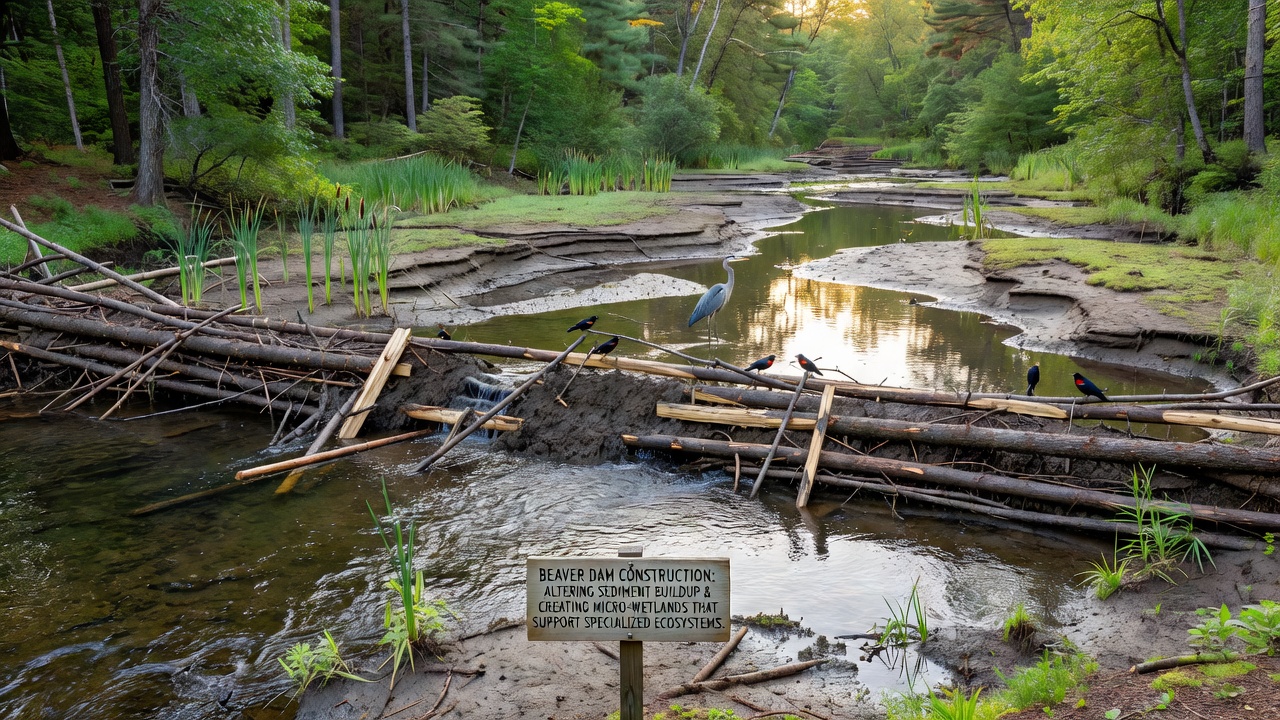
Water velocity drops sharply behind each new dam because the structure forces flow to spread out and lose energy, which allows silt, clay, and organic matter to drop out of suspension rather than continuing downstream. Engineers and hydrologists who monitor these sites record that the trapped material builds up behind the dam until it forms a flat, nutrient-rich layer several centimeters thick each season.
Turns out the combination of reduced flow and added organic debris also changes the chemistry of the water column, raising pH slightly while increasing dissolved nutrients that later support plant growth once the area stabilizes. Multiple long-term monitoring projects report that after three to five years the accumulated sediment often reaches depths of one to two meters in the deepest sections of the pool.
Creation of Micro-Wetlands Within Ravine Landscapes
The raised water table and saturated soils behind beaver dams transform narrow strips of former stream bank into small wetland patches that persist even during dry periods because the dam maintains a constant water supply. These micro-wetlands differ from larger floodplain marshes because they remain linear, following the original ravine contours while expanding only where the terrain allows water to spread.
Researchers have documented that the edges of these new wetlands develop distinct zones of standing water, saturated soil, and moist upland transition areas all within a few dozen meters of each other. According to records maintained by the U.S. Geological Survey, such features appear regularly in ravines where beaver populations have recolonized after decades of absence.
Specialized Aquatic Plant Colonies That Emerge
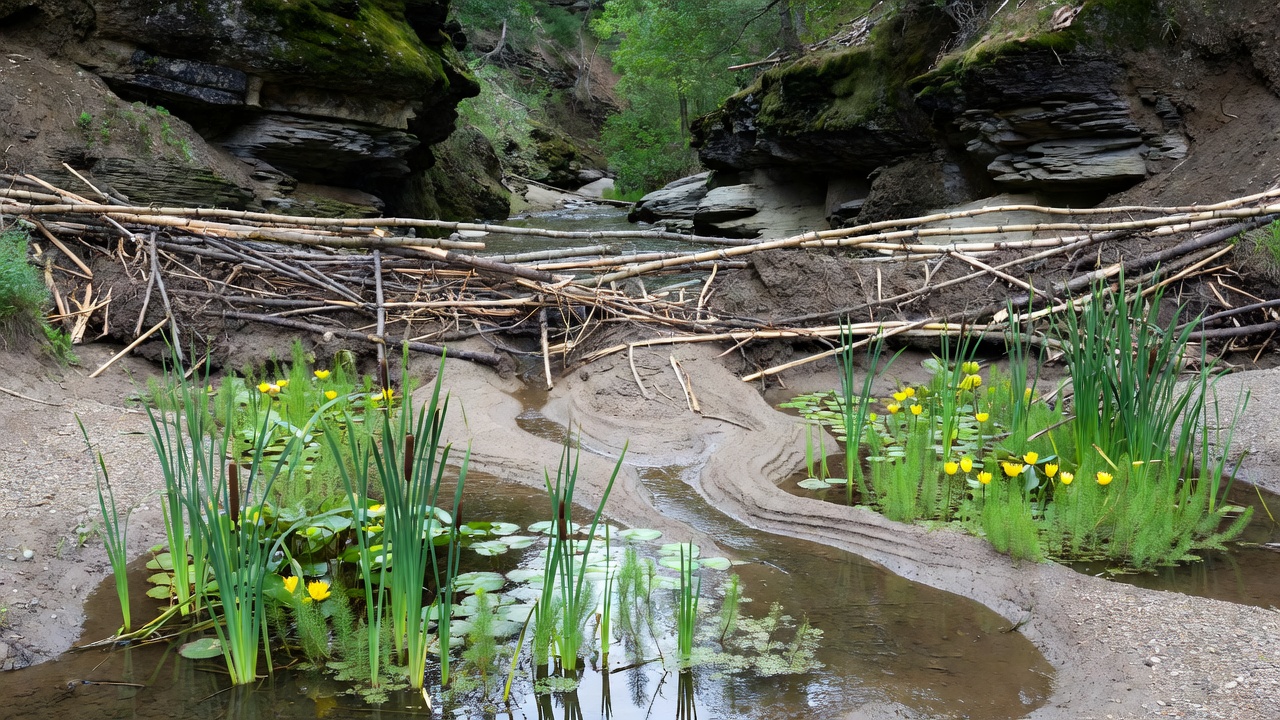
Once sediment accumulates and water remains shallow for extended periods, certain aquatic plants colonize the new surfaces because the stable, nutrient-laden substrate meets their specific requirements for light, moisture, and mineral content. Species such as water starwort, certain bladderworts, and rare sedges appear in these patches where they rarely grew before the dams existed.
Studies conducted by university ecology programs show that plant diversity within the micro-wetlands can reach twelve to eighteen species per hundred square meters compared with three to five species in adjacent undammed stream sections. The plants often form dense colonies because reduced current prevents seeds and fragments from washing away, allowing rapid local spread across the fresh sediment.
What's interesting is that some of these colonies include regionally uncommon species that rely on the precise combination of slow-moving water, fine sediment, and partial shade provided by overhanging ravine walls. Field surveys completed through 2025 and continuing into monitoring windows in October 2026 confirm that these plant assemblages remain stable as long as the dam holds and water levels stay consistent.
Long-Term Habitat Stability and Succession Patterns
Over time the sediment platform behind the dam may support emergent vegetation that further traps additional material, gradually converting sections of the micro-wetland into moist meadow while new dams upstream or downstream maintain overall moisture. Ecologists tracking these sites report that the entire sequence can repeat across multiple beaver generations, producing a shifting mosaic of wetland patches along the ravine length.
Canadian Wildlife Service data collected across similar narrow valley systems indicate that once established these plant colonies contribute organic matter that enriches the sediment further, supporting additional invertebrate and microbial communities that in turn influence plant health. The process remains self-reinforcing until major floods or beaver abandonment alters the structure.
Conclusion
Beaver activity in narrow ravine systems therefore functions as a natural engineering process that redistributes sediment, creates persistent shallow-water environments, and enables specialized aquatic plant colonies to establish where none existed previously. Ongoing observations through regional monitoring networks continue to document these changes across multiple watersheds, providing measurable evidence of how dam construction alters both physical and biological conditions in confined stream corridors.