Amir Günther · 8 October 2026
How Prevailing Breezes Redistribute Seeds Across the Floor of Secluded Mountain Depressions
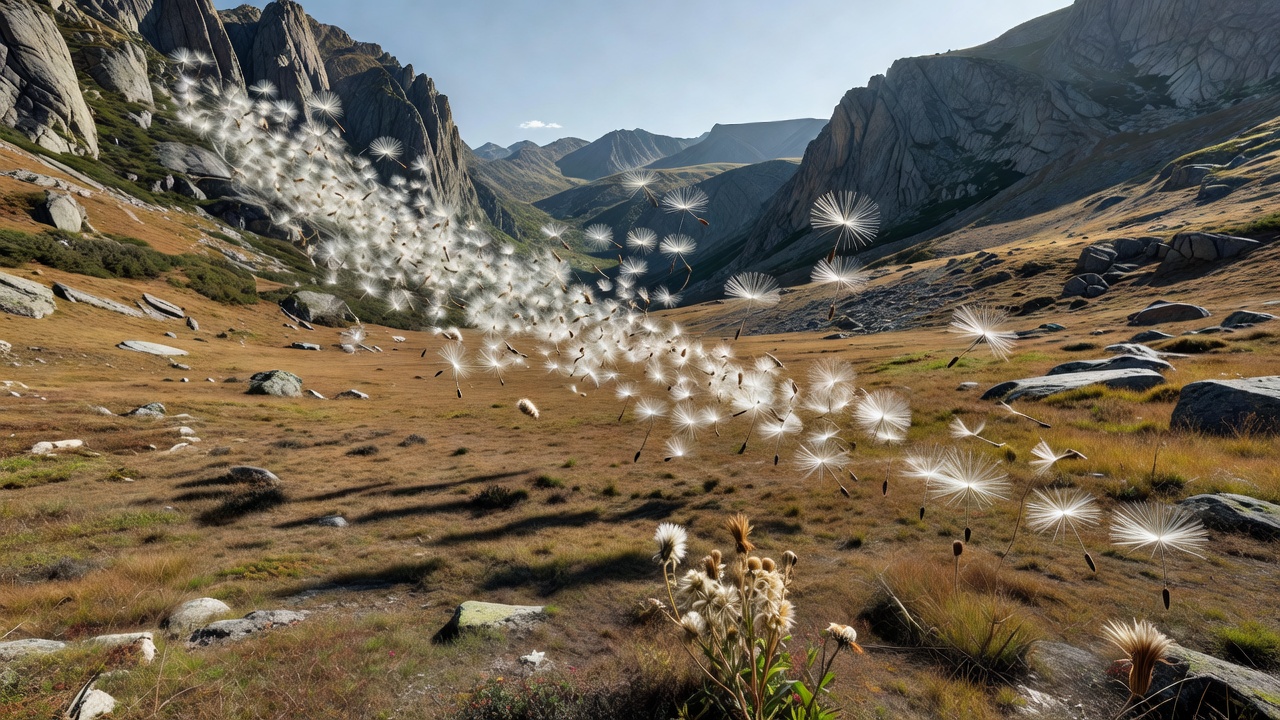
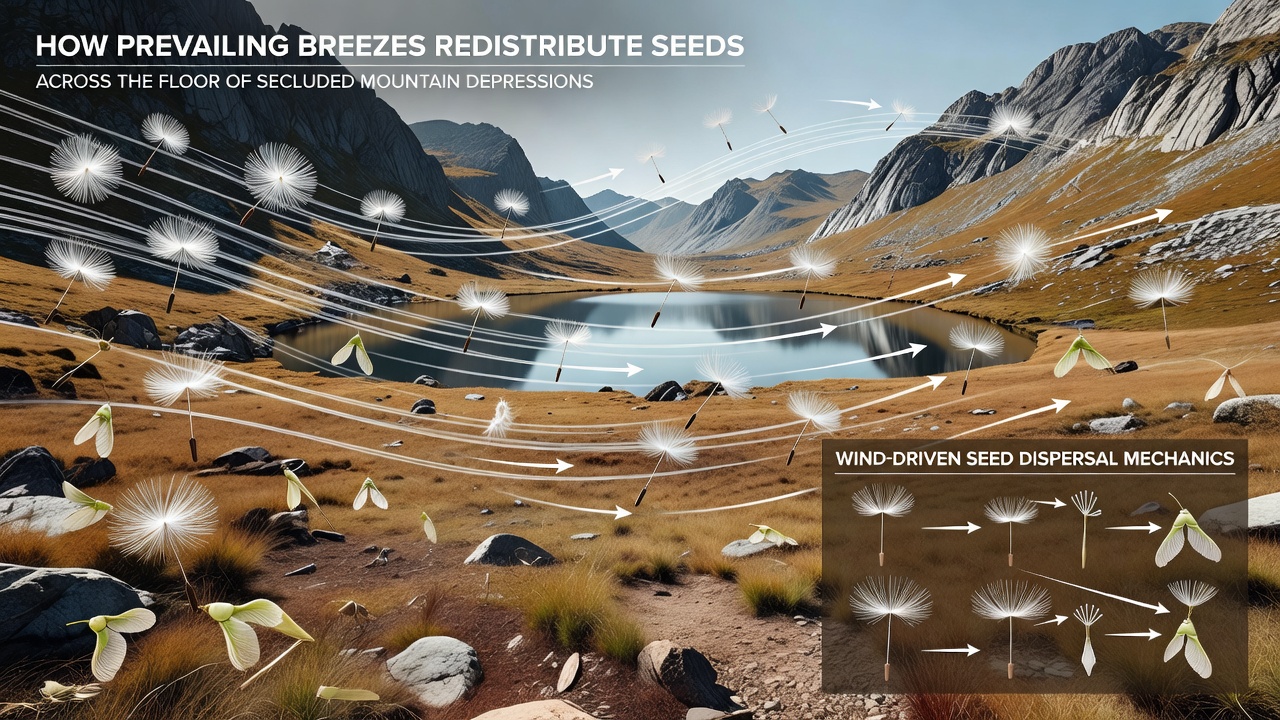
Prevailing breezes interact with the unique topography of mountain depressions to move seeds across valley floors in patterns shaped by elevation changes and wind corridors. These depressions, often formed by glacial activity or erosion, create sheltered environments where air currents slow and deposit material carried from surrounding slopes. Researchers studying anemochory note that seeds with adaptations like wings or plumes travel farther when caught in consistent wind directions that follow the contours of ridges before dropping into lower basins.
Topographic Influences on Seed Movement
Mountain depressions alter wind flow because their enclosed shapes trap and redirect breezes rather than allowing them to pass straight through. Data from field stations indicate that seeds entering these areas often settle in clusters along the northern or eastern edges where prevailing winds lose momentum against rising terrain. In regions like the Rocky Mountains and similar ranges in Canada, studies have tracked how lighter seeds from species such as maples and ashes accumulate in these low points while heavier ones remain closer to entry points from adjacent highlands. Observers note that seasonal shifts in wind patterns further concentrate dispersal, with stronger flows in spring carrying material deeper into depressions before calmer conditions allow settling on the forest floor.
Seed Adaptations and Dispersal Distances
Plants in upland areas produce seeds suited for wind transport that respond differently once they reach depression floors. Species with pappus structures on their seeds maintain buoyancy longer in the swirling air created by topographic barriers, which extends travel distances by several hundred meters according to measurements taken in multiple mountain sites. Research indicates that prevailing breezes aligned with the long axis of a depression can redistribute seeds across several hectares in a single event, whereas crosswinds limit movement to narrower bands near the perimeter. Those who've examined sediment layers in these basins find layered deposits that correspond to wind events over decades, revealing consistent patterns tied to dominant wind directions rather than random scattering.
Monitoring equipment placed at various elevations within depressions has recorded how turbulence near the floor slows seed descent and promotes even distribution. In one documented case from the Sierra Nevada range, lightweight seeds from conifers reached central basin areas primarily during periods of steady westerly flow that funneled air downward from higher ridges. Figures from these studies show accumulation rates varying with wind speed, with moderate breezes of 10 to 15 kilometers per hour proving most effective for broad redistribution compared to stronger gusts that carry material past the depression entirely.
Seasonal Patterns and Environmental Factors
Autumn winds play a notable role in seed redistribution because many plant species release propagules during this period when prevailing breezes strengthen. Records from October 2026 across several monitoring networks showed elevated seed deposition in mountain depressions following sustained wind events that aligned with regional weather systems. Soil moisture levels and leaf litter depth in these areas influence how far seeds travel once they touch down, with drier surfaces allowing secondary movement by lighter air currents. Data collected by forestry agencies in the United States and comparable organizations in Australia highlight that depressions with dense understory vegetation trap seeds more effectively than open basins where breezes continue to shift material around.
Soil composition also affects long-term outcomes because seeds landing in depressions encounter microhabitats that support germination at different rates than surrounding slopes. Evidence from long-term plots demonstrates that wind-deposited seeds contribute to higher plant diversity on depression floors, particularly for species adapted to lower light and higher humidity conditions. Those studying these systems find that prevailing breezes serve as the primary vector connecting upland source populations to isolated basin habitats, creating corridors that bypass steeper terrain barriers.
Case Examples from Different Regions
Investigations in the European Alps have documented similar redistribution processes where prevailing northerly breezes carry seeds from alpine meadows into glacial cirques. These studies, referenced in reports from regional environmental agencies, reveal that seed density increases toward the center of depressions during peak wind seasons. In contrast, observations from New Zealand's Southern Alps show how orographic effects modify wind paths and lead to asymmetric seed deposits along depression margins. Such patterns underscore how local geography interacts with broader atmospheric flows to determine final resting places for wind-dispersed material.
Additional research from Canadian national parks confirms that prevailing westerlies redistribute seeds across depression floors in patterns that correlate with ridge orientation and valley width. Measurements taken over multiple years indicate that annual variations in wind consistency produce corresponding shifts in plant community composition at basin centers. These findings align with broader ecological models that treat depressions as collection points within larger dispersal networks driven by consistent air movement.
Conclusion
Prevailing breezes function as key agents in moving seeds into and across the floors of secluded mountain depressions through interactions with topography, seed morphology, and seasonal wind regimes. Studies across multiple mountain systems demonstrate measurable patterns of deposition that reflect wind direction and speed rather than chance alone. Continued monitoring provides data that clarify how these processes sustain plant populations in isolated basin environments over time.